In what ways could Wallace’s theory about education be applicable to the writing of Alice Munro?
In Wallace's eyes, education and experience shape an individual to become more self aware and aware about the life that they are surrounded by. The way that he views educated people is that they have been through enough experiences in life to have learned values and principles, and simply how to see the world for what it is, the very reality we are living in. Furthermore in Wallace's speech he accentuates the essence of human nature which is to live and learn and then look at things in a different perspective, as for him IQ is not really that important if one does not have an EQ.
Regarding literature, it develops empathy and emotional intelligence simply becauses reading realistic books and stories are another form of getting experience since the story is about someone's life and not something fictional that would never happen, therefore the audience perceives the story through the narrator's view and the reader lives the experience in the book/story together with the characters. When reading a nonfiction story it is easy for the readers to sympathize with the characters as they are being put in a realistic situation which the people can also imagine themselves in. Furthermore, some stories can even make the readers reflect on their lives if what has happened in the story has happened with them, thus generating empathy which leads to emotional intelligence.
When it comes to nonfiction stories and books, the ideas and themes in it are much more complex to be identified and even such aspects as archetypes are hard to be identified as it the story portray real lives and not some magical experience. Within complex ideas and relatable stories, comes the awareness of human interaction and the interpretation of human beings.
Alice Munro is a great example of an author whose writing as consistently nonfictional as she explores human relationships in different circumstances and situations which are all realistic.In many of her stories such as in Passions and Runaway realistic ideas are being explored and integrated within the story. In Passions for example Alice Munro explores the loss of innocence, how easily people can get lured in and influenced through bad intentions and how female sexuality is something that should be talked about. All of these ideas are real and still present in today's day. Another example would be the story Runaway where ideas such as dysfunctional marriages which are out of control, seeking attention through lies and dominant over other people are explore and again are realistic and present in today's day.
To answer the prompt, Wallace's theory about education is somewhat already implanted in Alice Munro's stories as she explores realistic and complex ideas.
Saturday, 16 September 2017

Sunday, 27 August 2017
the life of a trilingual student + Boys and Girls

Which mean that my English went back to what it was like when I first got here in Abu Dhabi back in Grade 7, although it will come back eventually. Another aspect regarding languages is my accent. I now realized that when I speak in portuguese I no longer sound like a native, I sound like a foreigner who learned to speak the language. Additionally I have come to realize that my thoughts are now in English and when I spoke them in Portuguese, it sounded as if I had translated them on google translate. Basically, speaking a bunch of languages is pretty hard and it gets messy.
Furthermore, the readings that I was assigned to complete during summer holiday are going pretty well. The analysis part takes a while because it has to be very detailed but the stories itself are interesting.
My favorite one would have to be Boys and Girls. Firstly I have already read that story back in Grade 11 or 10 (can't really remember the time frame) and secondly that story is more than just a story as it portrayed how women were inferior to men in that century and how the have been fighting since that time which was in 1968 to break the expectations of what a woman should look, do or behave like. Hence reinforcing feministic views. I really enjoyed reading this again because as I feminist myself it pleases me to see the development of it and how women were fighting it with literature. Furthermore what really stood out to me in this specific story is the horse Flora as a symbol of the narrator herself. A wild girl who does not want to be trained by no one and the only thing that she wants is to be free and do whatever may please her. However in the century she is living and in the society she is situated, other factors such as her family corner her into falling into this domesticated girl she is supposed to be. This accurately represents the struggle of many girls and the pressure they suffered form their parents and the people around them.
Summer Holiday Diary Entry

The weather could not be better, as a tropical country, it is never too hot or too cold, it is simply perfect. Everything about Brazil's nature is perfect, aside from those destroying it, it is the most beautiful country I've seen and I'm happy to call it my home, even with all the mess going around there.
My holiday was amazing and I cannot express the love and joy I feel when I go back to my country and visit my family, my home and the nature that I have a deep passion for.
Nothing that I did back in Brazil is considerably interesting and amusing for some, however myself as someone who deeply values family, appreciates the time that I had to spend with my grandfather and my cousins.
Honestly speaking, my holiday was neither too short or too long. It was just the right time.
Back in my town I did many things such as having the pleasure to eat as much as I could (the food there is out of this world), visit new places in the mountains with my family and try to catch the perfect sunset, have long walks and conversations with my grandfather and go out with my cousins a lot. However throughout my holiday there is one thing that stuck to my head. As I went over my old school to visit my friends which now are more of acquaintances, I realized how incredibly lucky I am to have moved over to Abu Dhabi.
I do not speak of the people, since the people there are just as good as the people here. However I do mean that education and experience wise, I obtained more of that after I came here than I would have if I stayed there. In Brazil there is no diversity, pretty much everyone is Brazilian whereas here I live and breathe the same air as other hundred nationalities do as well.
Another two things that I learned this summer and will carry it with me for life is that:
1- People change and that is inevitable
2- We must preserve the good things in our lives.
Tuesday, 16 May 2017
The three long long questions #TFA
 1. What is the significance of Okonkwo’s character? What does he represent or what is he symbolic of?
2. What is the purpose of Okonkwo’s character within the text?
3. How does Okonkwo’s character contribute to themes or meaning?
In my opinion Okonkwo's character as a tragic hero represents the bad aspects of the Igbo culture. He is stubborn and does not listen to anyone. He thinks that he is always right. Okonkwo not only disrespects women but beats them. He also does not take advice from wiser people than him, resulting in his tragedy. Okonkwo is symbolic because he is conservative to a bad extreme. Not only does the highlight the bad aspect of the Igbo culture but he gives a bad reputation to them as a whole. Due to his credibility in their community as a man who won many titles thanks to his achievements he could represent the Igbo people in that sense, however since the start of his downfall in the novel he no longer is able to represent his people.
Although Okonkwo does bring a bad reputation to the Igbo people, the purpose of his character is to enhance the importance of religion and of fear, men, respect, reputation, tradition and customs within the Igbo culture. These themes are highlighted through Okonkwo and he does this through his persistent acts. Okonkwo purpose is to indirectly represent why being extreme is a disadvantage within a community and not being able to efficiently communicate and sacrifice his ideas in order to come to an agreement where all can be benefited through it.
1. What do contradictions between actions, thoughts, description, and speech say about the character?
2. How does tone influence our perception of the character?
Okonkwo is quite a contradicting character. While he claims to follow the Igbo tradition, religion and culture he breaks many rules which are completely against the Igbo beliefs and essentially the steps to his tragedy in the novel. This reveals that Okonkwo is not a consistent character and it is his impulsive acts and dynamic change which make him into a tragic hero. Furthermore his fear of sharing any similarities with his father make him a sour and hateful man, since he does not display any signs of love or joy.
Okonkwo has a very vigorous and ruthless tone to his speech and that only influences the audience not to sympathize with him. Our perception of the character modifies to a more cynical and less forgiving manner.
3. How does the order in which we learn the history of a character influence us?
4. How does the placement within and relationship with family affect our understanding of a character?
The order in which the audience learns the history of the character is significant because in the very beginning of the novel, the audience perceives Okonkwo as someone who rose from nothing and without any aid. Our perception consists of a strong man who realized that he could be much more what his father ever was. Not only that but someone that could potentially become the greatest member of his community. The beginning builds up our expectation of the character and as the plot develops the audience gets more and more disappointed due to our expectations of Okonkwo being crashed to the ground.
The placement of the relationships between Okonkwo and his family tells the audience that due to his experience with his father as a child he clearly had some psychological disturbance where he is simply incapable of displaying love and being gentle, therefore attributing to the "male" characteristics which are interpreted as brutal, violent and non-forgiving.
5. What significance do names have for other characters and for us?
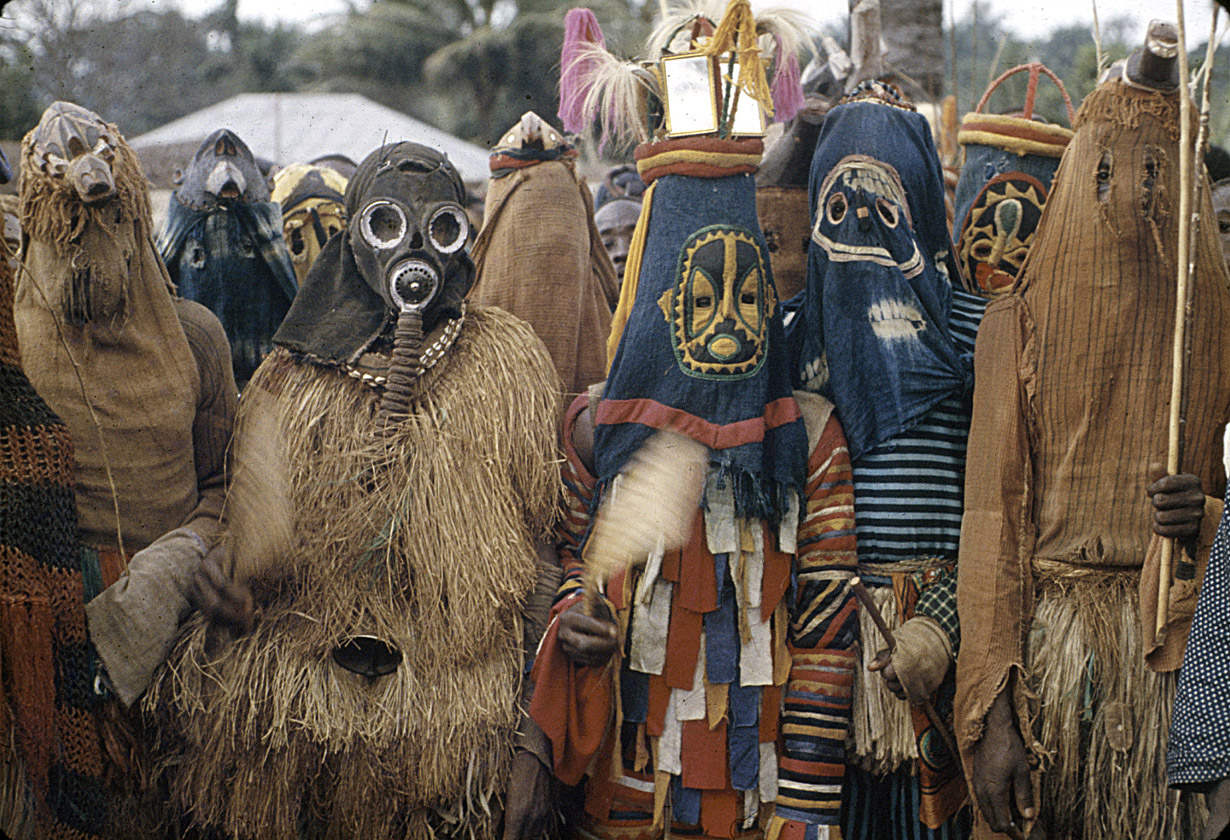
In the Igbo culture every name has a specific meaning. For example the Egwuwus which are the spirits of the Igbo people. However for us as readers of a culture we do not have previous knowledge of, these names are quite insignificant until the book is read.
Furthermore there are some words which Achebe has managed to create meaning within the Igbo culture and connect it with our understanding of what it means. For example, Okonkwo refers to his father as an Agbala. In their tradition Agbala refers to women, therefore comparing his father to a woman insinuating that he has feminine characteristics and that he is not good enough to be called a man.
Furthermore there are some words which Achebe has managed to create meaning within the Igbo culture and connect it with our understanding of what it means. For example, Okonkwo refers to his father as an Agbala. In their tradition Agbala refers to women, therefore comparing his father to a woman insinuating that he has feminine characteristics and that he is not good enough to be called a man.
Saturday, 6 May 2017
Thesis &: Gender Understanding #TFA
With reference to Things Fall Apart, discuss how an understanding of gender influences how the text may be understood.
Thesis-
In the novel, Things Fall Apart, Chinua Achebe explores the oppression and misconception of women during mid 19th century in Nigeria with the purpose to manifest an awareness of social structure hierarchy, theme of gender and understanding of the Igbo community and its values.
Topic Sentence 1-
Social structure hierarchy is established within the text by demonstrating the roles of women within the Igbo community in the ways of how they were treated and how they acted within the society.
Topic Sentence 2-
The theme of gender is created in the novel through the use of gender stereotypes and the abridgement of women compared to men at the time and period.
Topic Sentence 3-
The Igbo community's values are revealed through the text by showcasing how different genders carried out different tasks and what was considered acceptable and unacceptable.
Wednesday, 3 May 2017
Thesis- #TFA
 Prompt: With reference to Things Fall Apart, show how sub-plots or secondary characters contribute to the reader’s understanding and appreciation of the work as a whole.
 Through the medium of a culturally and traditionally authentic book after the colonization of Nigeria, Achebe emphasizes the theme of power and fear through the contrast between secondary characters such as Unoka, Nwoye and the protagonist, Okonkowo, in order to challenge the idea of hegemony within a pure culture endowing cultural context of composition further developing Okonkwo's tragic hero archetype which is indirectly characterized throughout the novel by his actions displaying his need for masculinity and pride.
Saturday, 29 April 2017
Things Fall Apart: Tragic Hero
In many ways Things Fall Apart is considered a tragedy. Why would Achebe, taking into account the cultural context, choose to characterize Okonkwo using the tragic hero archetype?
Things Fall Apart is considered a tragedy due to the protagonist conforming to the archetype of a tragic hero. Okonkwo was a tragic hero because he had a lot of internal problems, specially with his dad and his personal beliefs against the village's beliefs. Okonkwo was different and he dealt with things different in his own way. Furthermore throughout the book, his internal problems cause him to obtain external problems and that is when things get out of control. By committing a crime in the sacred peace of weak, killing Ikemefuna and accidentally being a female murder Okonkwo and his family are exiled for 7 years and in his return the missionaries have taken control of Umuofia. Okonkwo's downfall was a factor which contributed towards the missionaries establishing themselves in Umuofia. Maybe in an alternative book, if Okonkwo was there when the missionaries came, maybe he would have been brave enough to fight the missionaries and try to protect the village. However that was his downfall, losing something that was so important to him; his traditions, his yams, his culture and his village.
Taking into account the cultural context when the book was written in 1958, when the British Had made their way to Nigeria with the purpose to colonize every single bit of the country. I believe that Achebe's intention when he characterized Okonkwo as a tragic hero was to in a sense replicate the country's and the people's misfortune of colonization, as they did not want it. Furthermore Achebe's message of the book is to convey the themes of perception of masculinity, complex language leading to cultural differences, pride bringing negative effects and the clash among change and tradition. In addition it can be said that he portrayed Okonkwo as a tragic hero due to the fact that he wanted the people of Nigeria to read this book and understand that colonization could bring a man to kills himself, if he had deep love and compassion for his traditions and culture. The ending of the book was meant to motivate the people of Nigeria for them to see what was happening to them in an extremist lens.
Things Fall Apart is considered a tragedy due to the protagonist conforming to the archetype of a tragic hero. Okonkwo was a tragic hero because he had a lot of internal problems, specially with his dad and his personal beliefs against the village's beliefs. Okonkwo was different and he dealt with things different in his own way. Furthermore throughout the book, his internal problems cause him to obtain external problems and that is when things get out of control. By committing a crime in the sacred peace of weak, killing Ikemefuna and accidentally being a female murder Okonkwo and his family are exiled for 7 years and in his return the missionaries have taken control of Umuofia. Okonkwo's downfall was a factor which contributed towards the missionaries establishing themselves in Umuofia. Maybe in an alternative book, if Okonkwo was there when the missionaries came, maybe he would have been brave enough to fight the missionaries and try to protect the village. However that was his downfall, losing something that was so important to him; his traditions, his yams, his culture and his village.
Taking into account the cultural context when the book was written in 1958, when the British Had made their way to Nigeria with the purpose to colonize every single bit of the country. I believe that Achebe's intention when he characterized Okonkwo as a tragic hero was to in a sense replicate the country's and the people's misfortune of colonization, as they did not want it. Furthermore Achebe's message of the book is to convey the themes of perception of masculinity, complex language leading to cultural differences, pride bringing negative effects and the clash among change and tradition. In addition it can be said that he portrayed Okonkwo as a tragic hero due to the fact that he wanted the people of Nigeria to read this book and understand that colonization could bring a man to kills himself, if he had deep love and compassion for his traditions and culture. The ending of the book was meant to motivate the people of Nigeria for them to see what was happening to them in an extremist lens.
Subscribe to:
Posts (Atom)