Tuesday, 16 May 2017

The three long long questions #TFA

Image result for okonkwo1. What is the significance of Okonkwo’s character? What does he represent or what is he symbolic of? 
2. What is the purpose of Okonkwo’s character within the text? 
3. How does Okonkwo’s character contribute to themes or meaning?
In my opinion Okonkwo's character as a tragic hero represents the bad aspects of the Igbo culture. He is stubborn and does not listen to anyone. He thinks that he is always right. Okonkwo not only disrespects women but beats them. He also does not take advice from wiser people than him, resulting in his tragedy. Okonkwo is symbolic because he is conservative to a bad extreme. Not only does the highlight the bad aspect of the Igbo culture but he gives a bad reputation to them as a whole. Due to his credibility in their community as a man who won many titles thanks to his achievements he could represent the Igbo people in that sense, however since the start of his downfall in the novel he no longer is able to represent his people. 
Although Okonkwo does bring a bad reputation to the Igbo people, the purpose of his character is to enhance the importance of religion and of fear, men, respect, reputation, tradition and customs within the Igbo culture. These themes are highlighted through Okonkwo and he does this through his persistent acts. Okonkwo purpose is to indirectly represent why being extreme is a disadvantage within a community and not being able to efficiently communicate and sacrifice his ideas in order to come to an agreement where all can be benefited through it. 
1. What do contradictions between actions, thoughts, description, and speech say about the character? 
2. How does tone influence our perception of the character? 
Okonkwo is quite a contradicting character. While he claims to follow the Igbo tradition, religion and culture he breaks many rules which are completely against the Igbo beliefs and essentially the steps to his tragedy in the novel. This reveals that Okonkwo is not a consistent character and it is his impulsive acts and dynamic change which make him into a tragic hero. Furthermore his fear of sharing any similarities with his father make him a sour and hateful man, since he does not display any signs of love or joy. 
Okonkwo has a very vigorous and ruthless tone to his speech and that only influences the audience not to sympathize with him. Our perception of the character modifies to a more cynical and less forgiving manner. 
3. How does the order in which we learn the history of a character influence us? 
4. How does the placement within and relationship with family affect our understanding of a character? 
The order in which the audience learns the history of the character is significant because in the very beginning of the novel, the audience perceives Okonkwo as someone who rose from nothing and without any aid. Our perception consists of a strong man who realized that he could be much more what his father ever was. Not only that but someone that could potentially become the greatest member of his community. The beginning builds up our expectation of the character and as the plot develops the audience gets more and more disappointed due to our expectations of Okonkwo being crashed to the ground. 
The placement of the relationships between Okonkwo and his family tells the audience that due to his experience with his father as a child he clearly had some psychological disturbance where he is simply incapable of displaying love and being gentle, therefore attributing to the "male" characteristics which are interpreted as brutal, violent and non-forgiving. 

5. What significance do names have for other characters and for us?
In the Igbo culture every name has a specific meaning. For example the Egwuwus which are the spirits of the Igbo people. However for us as readers of a culture we do not have previous knowledge of, these names are quite insignificant until the book is read.

Furthermore there are some words which Achebe has managed to create meaning within the Igbo culture and connect it with our understanding of what it means. For example, Okonkwo refers to his father as an Agbala. In their tradition Agbala refers to women, therefore comparing his father to a woman insinuating that he has feminine characteristics and that he is not good enough to be called a man.

Saturday, 6 May 2017

Thesis &: Gender Understanding #TFA


With reference to Things Fall Apart, discuss how an understanding of gender influences how the text may be understood.
Image result for igbo

Thesis-
In the novel, Things Fall Apart, Chinua Achebe explores the oppression and misconception of women during mid 19th century in Nigeria with the purpose to manifest an awareness of social structure hierarchy, theme of gender and understanding of the Igbo community and its values.

Topic Sentence 1-
Social structure hierarchy is established within the text by demonstrating the roles of women within the Igbo community in the ways of how they were treated and how they acted within the society.

Topic Sentence 2-
The theme of gender is created in the novel through the use of gender stereotypes and the abridgement of women compared to men at the time and period.

Topic Sentence 3-
The Igbo community's values are revealed through the text by showcasing how different genders carried out different tasks and what was considered acceptable and unacceptable.


Wednesday, 3 May 2017

Thesis- #TFA

Image result for chinua achebe booksPrompt: With reference to Things Fall Apart, show how sub-plots or secondary characters contribute to the reader’s understanding and appreciation of the work as a whole. 


Through the medium of a culturally and traditionally authentic book after the colonization of Nigeria, Achebe emphasizes the theme of power and fear through the contrast between secondary characters such as Unoka, Nwoye and the protagonist, Okonkowo, in order to challenge the idea of hegemony within a pure culture endowing cultural context of composition further developing Okonkwo's tragic hero archetype which is indirectly characterized throughout the novel by his actions displaying his need for masculinity and pride. 

Saturday, 29 April 2017

Things Fall Apart: Tragic Hero

In many ways Things Fall Apart is considered a tragedy. Why would Achebe, taking into account the cultural context, choose to characterize Okonkwo using the tragic hero archetype? 

Things Fall Apart is considered a tragedy due to the protagonist conforming to the archetype of a tragic hero. Okonkwo was a tragic hero because he had a lot of internal problems, specially with his dad and his personal beliefs against the village's beliefs. Okonkwo was different and he dealt with things different in his own way. Furthermore throughout the book, his internal problems cause him to obtain external problems and that is when things get out of control. By committing a crime in the sacred peace of weak, killing Ikemefuna and accidentally being a female murder Okonkwo and his family are exiled for 7 years and in his return the missionaries have taken control of Umuofia. Okonkwo's downfall was a factor which contributed towards the missionaries establishing themselves in Umuofia. Maybe in an alternative book, if Okonkwo was there when the missionaries came, maybe he would have been brave enough to fight the missionaries and try to protect the village. However that was his downfall, losing something that was so important to him; his traditions, his yams, his culture and his village.

 Taking into account the cultural context when the book was written in 1958, when the British Had made their way to Nigeria with the purpose to colonize every single bit of the country. I believe that Achebe's intention when he characterized Okonkwo as a tragic hero was to in a sense replicate the country's and the people's misfortune of colonization, as they did not want it. Furthermore Achebe's message of the book is to convey the themes of perception of masculinity, complex language leading to cultural differences, pride bringing negative effects and the clash among change and tradition. In addition it can be said that he portrayed Okonkwo as a tragic hero due to the fact that he wanted the people of Nigeria to read this book and understand that colonization could bring a man to kills himself, if he had deep love and compassion for his traditions and culture. The ending of the book was meant to motivate the people of Nigeria for them to see what was happening to them in an extremist lens.

Things Fall Apart Rap Battle


Late 20th century, in Nigeria 

Okonkwo we all know your father n'était pas beau
Unoka, a common lie low
 Indebted, broke, a weak weak father
all you wanted was for him to be slaughtered 

The CAT arrived, it was the time to display your power 
And give him a blood shower 
your masculinity slays like a blue jay’s 
show them your pride so you can be satisfied

But hold it, why did you beat your second wife?
she just wanted to braid her hair 
But you had the audacity to be unfair 
and in the week of peace? what a coward crease

Shall I keep going? Not only did you kill Ikemefuna
but your gun was blowing in an ongoing funeral 
a female kind of murder, that was inexcusable 
 Man, real talk now, did you know life ain’t renewable? 

You don't listen to the Oracle
You got your family exiled 
All because you were such, such a stubborn child 
Now go, go cry to you mama in Mbanta 

You say you don't wanna resemble your father 
then why are you being a weak cold walker 
you don't give your children love
But Nwoye found religion up above

one, two, three weeks later 
You come back to Umuofia and see it as a traitor 
Missionaries everywhere
beware the white are on sight


We all know your arrogance is blown out of proportion
the pride you carry was a distortion
these yams gave you a wealthier reality 
however you come from a humble family, get your sanity  
  
Your fragile masculinity was your misfortune 
you couldn't use your heart but it was only another organ 
No more Kola Nuts were opened that day 
because Okonkwo hung himself and flew away 

Things Fell Apart 

Reflecting upon the rap battle, I believe that personally it was a very interesting approach into further understanding how Okonkwo fulfils the archetype of a tragic hero. Personally I believe that these lyrics illustrate the main events that lead to Okonkwo's downfall. Furthermore reflecting on my performance, it was very funny and unfortunately I started laughing at the end. But it was a fun experience. 

Sunday, 23 April 2017

Igbo Background Assignment

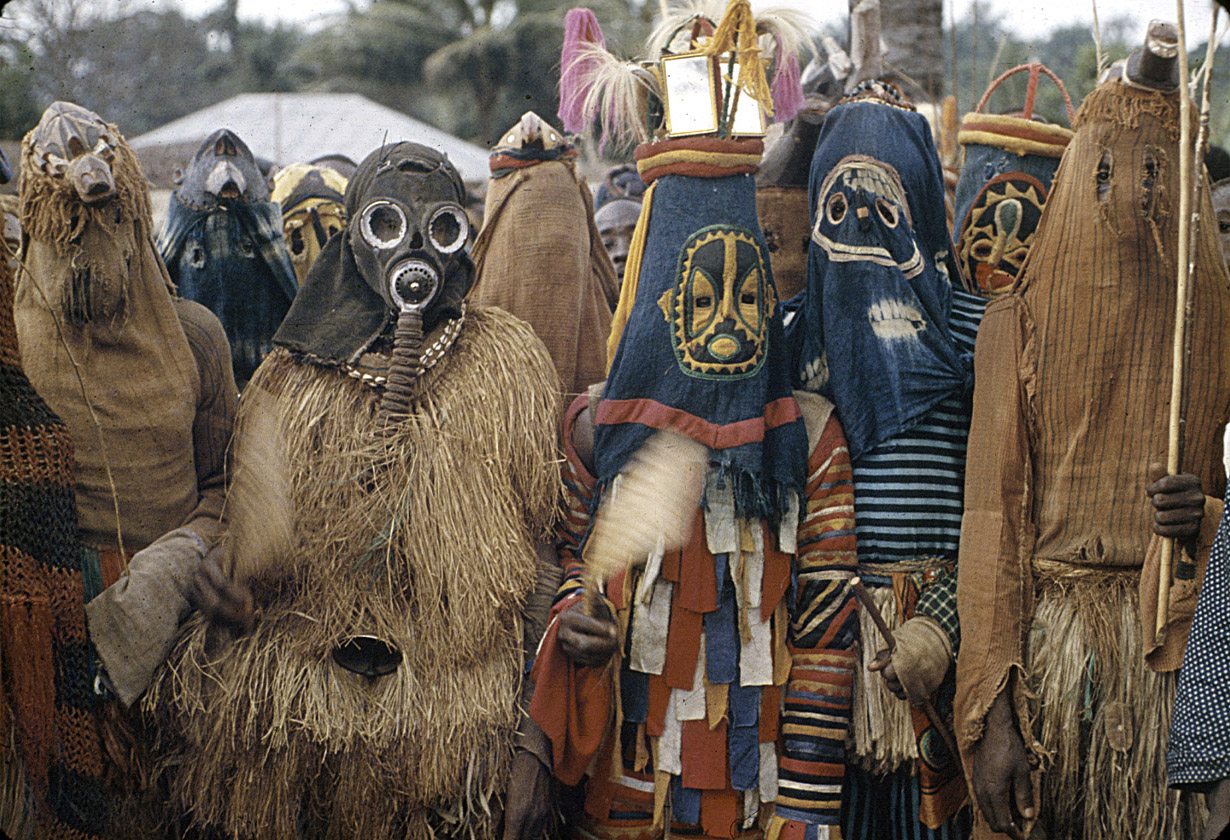
Image result for igbo people
Good Afternoon! What a beautiful audience is presented in front of me. I am delighted to be here today as I believe that it is my duty to open your eyes to the original and pure tradition, beliefs and culture of the Igbo people.

We as colonisers, we do not see the full story of tribes. We only see one story and it is usually not wrong however it is incomplete. Furthermore as colonisers although we think that by colonising countries, cities and tribes we might be contributing towards the people's benefits by introducing them to modern ways of living and traditions, we might be killing something that they believe to be pure and loved. 

Do you know how many languages have been extinct due to colonisation? Do you know how much connecting with ancestors is important to the Igbo tribe? Are you aware that the Igbo people form one of the largest ethnic groups in Africa?

After my expedition to the “savage lands” I was blown away. We have been wrong this entire time. After arriving in Nigeria with a closed mindset, I had finally realised how a book should not be judged by its cover. Although they are not so likeable towards the white skinned people, they were polite. The Igbo people are full of interesting traditions which they believe in with all their soul, however we name that as sorcery and nonsense.

The way I see things, respect should go both ways. Don’t sell me a dog and pretend that colonising brings out the best of those “savage” tribes. What it does it that it kills their pureness and forces them to live a lie, live within beliefs they don't believe and live within an unwanted superior force.

What if the Igbo tribe was your tribe, your people, your culture? Would you be okay with people you don't even know, simply invading it because they feel as hey are superior and changing everything around you, tradition and culture, important concepts for the tribe to survive?

Colonising should be applied, do not twist my words. However there should be a limit to the extent of that application. In my honest opinion, new modern ways concerning behaviour, culture and tradition should be presented towards the Igbo community in a persuasive way. Those that are interested in it can take part and become modern people and those who want to stick with their origins and purity should be able to do so. 

Let’s not send our mutton shunters into Africa with explicit orders to take over every land they find. Instead we can tell them to harmonise with the Igbo people and not take any violent acts towards them. Respect should go both ways.

Taking the egg over the Igbo people is not victory. Victory is to harmonise with them in a peaceful manner and share culture both ways. We all can learn from them as they can learn from us. 

In the name of Britain, we shall not be violent, we shall be civil. In the name of Britain we shall not disregard human rights, we shall re-enforce it. In the name of Britain, let’s consider what they have to offer and make our offer persuasive enough that they will have interest in it. 


Thank You!

Sunday, 16 April 2017

Achebe's Interview

Image result for chinua achebe
The most meaningful take away of today's discussion, in my opinion, is how the English Language is important and the powerful effect has on people. After Nigeria got Colonised by the British, English became the most spoken language there. Therefore, in  order for Achebe to reach out to his audience and express his feelings about colonisation to all, he had to utilise the English Language. It was a must for him to utilise the coloniser's language in favour of the people and against the colonisers. Furthermore he accentuates the importance of literature and the effect of it on the readers. He says that when a person is able to sympathise and relate to someone else that is completely unknown and far away, that is the true effect of literature right there and it is something beautiful. In addition, going back to the importance of the English language to his novel is that he uses it to create an image of how pure his community was before the colonisers occupied it and to create the idea of culture authenticity. 

"What's more difficult is to identify with someone you don't see, who's very far away, who's a different color, who eats a different kind of food. When you begin to do that then literature is really performing its wonders."

This quotes specifically can be used as evidence from the text in order to support my point of view or it can be used as a form to tool in order to demonstrate that even though it may not be the most important pert of the Achebe Interview, he was still reviling a pretty powerful message indirectly to us. Even though that the interview was not about literature, people forget that if it wasn’t for literature his book wouldn’t have existed. Personally I think that the fact that he accentuates what literature does and how it perform its wonders demonstrates what his young self was aiming to do while he was writing to do. This statement aim is to make the audience aware of his goal and make them aware that he reached it.